

To watch the knowledge
Of yesterday, grow today.
Handed down through time.
A Love Letter To My Grandfather
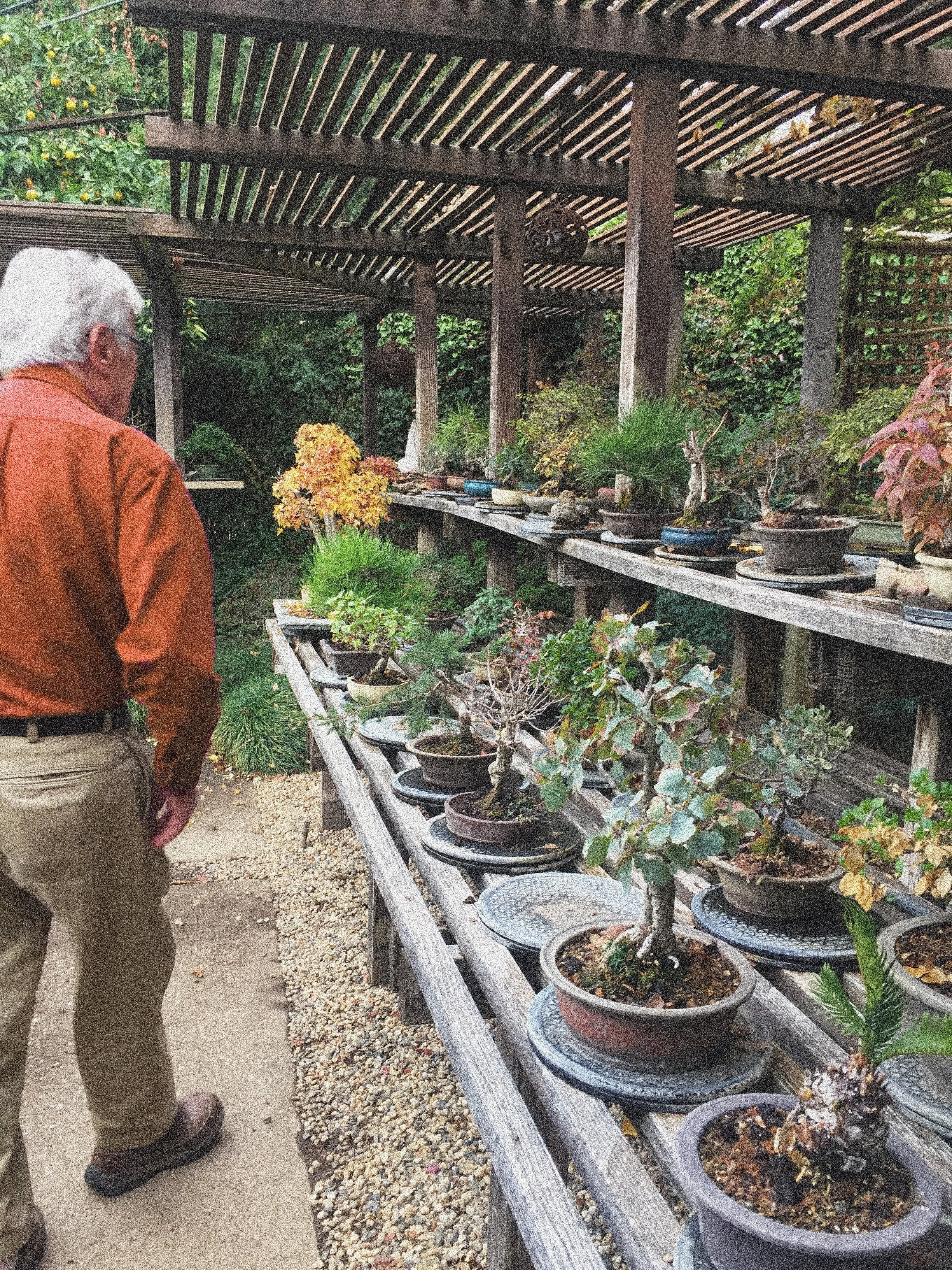
The art of bonsai has been part of my life since I was very young. My grandfather, Walt Brainerd, was deeply connected to these trees. He spent much of his life caring for a collection that grew to well over a hundred. I have many fond memories of watching those trees change with time—growing, being shaped, and slowly becoming something different with each passing year.
My grandfather no longer practices the art of bonsai, but I have begun my own journey into this relationship between time and nature.
Erloom is where our passions meet: my love of design intertwined with my grandfather’s love of bonsai. Each pot is meticulously crafted as a modern interpretation kof traditional forms that have evolved over thousands of years.
As time passes, I sometimes wish I had become interested in bonsai earlier. I wish I had spent more time beside my grandfather, learning from the knowledge and experience he had gathered over a lifetime.
Erloom is my way of carrying a piece of that forward.
It is an expression of time, craft, and continuity—a way of passing something tangible from one generation to the next. Something made to be lived with, shaped by time, and eventually passed on again.
A reminder of where we come from, what we inherit, and where we might go next.
Thomas Adcock
Founder, Erloom
About Erloom
Passed down through generations, a bonsai tree can outlive those who care for it. If kept alive and allowed to thrive, it can continue to transform long after its first caretaker is gone.
The Erloom pot was created to parallel this relationship with time. Its understated form is designed to emphasize the natural beauty of the bonsai within, while the steel itself changes gradually through use and exposure. As it develops a natural patina, the pot takes on its own character and history alongside the tree.
Erloom pots are cut from various types of metal such as steel and aluminum, then sanded to remove excess material from the cutting process and finished by hand. Each side is assembled through a precise joinery pattern, sliding together and interlocking to create a strong, durable structure without traditional fasteners or bonding methods.
The weight of the steel provides a stable foundation for the tree, particularly for styles such as Kengai, while the construction is designed to endure for generations.